

Escaping the “Prototype Trap”
It’s a familiar moment in product development—the design works flawlessly in a prototype batch of five, but when scaled to 5,000 units, costs spike, tolerances drift, and performance becomes inconsistent.
This is the “Prototype Trap,” where a concept proves viable in theory but fails under the realities of production.
The Prototype-to-Production journey is not a simple handoff from engineering to manufacturing. It is a strategic partnership that requires alignment from the earliest design stages through full-scale output. For high-spec components, where tolerances are tight and materials are demanding, this transition must be engineered with precision.
That’s where ACI Industries stands apart. As a Wisconsin-based Tier 1 manufacturing partner, ACI integrates DFM for CNC, multi-axis machining scalability, and production-grade process control from day one to ensure that what works in the prototype phase performs just as reliably at scale.
Embedding DFM into High-Spec Components Early
Design for Manufacturability (DFM) is often misunderstood as a compromise. In reality, it’s an optimization strategy, one that preserves the function of a part while improving its manufacturability at scale.
At ACI Industries, DFM for CNC begins with identifying hidden cost-drivers within a design. Features like perfectly sharp internal corners, unnecessarily tight tolerances on non-critical dimensions, or complex geometries that require specialized tooling can significantly impact production efficiency.
For example, specifying a standard internal radius, such as 0.031 inch, allows machinists to use robust, readily available tooling that performs reliably in high-speed environments. This seemingly small adjustment can dramatically improve tool life, reduce cycle times, and enhance consistency across large production runs.
By embedding DFM early in the Prototype-to-Production process, engineers can eliminate inefficiencies before they become expensive problems—ensuring that designs are not only functional but also scalable.
Material Strategy: The Foundation of High-Spec Scalability
Material selection is one of the most critical decisions in the Prototype-to-Production roadmap. High-performance industries such as aerospace and medical manufacturing often rely on advanced alloys like Titanium (Ti-6Al-4V) and 17-4 PH Stainless Steel for their strength, corrosion resistance, and durability.
However, these materials introduce a new layer of complexity: material variability.
In high-volume production, bar stock can vary by as much as 10% in surface condition or dimensional consistency. Without proper planning, this variability can lead to incomplete machining passes, inconsistent finishes, or out-of-spec components.
To address this, ACI’s solutions engineering team incorporates strategic allowances into the design. These allowances ensure that tools can fully “clean up” the material surface, delivering consistent results across every part in a production run.
By aligning material strategy with machining capability, manufacturers can maintain both performance and repeatability, two critical factors in scaling high-spec components.
The Prototyping Bridge: Validating for Production Intent
Not all prototypes are created equal.
While additive manufacturing methods like 3D printing are useful for validating form and basic fit, they often fall short in functional performance. Surface finish, material properties, and tolerance accuracy can differ significantly from production realities.
That’s why the most effective prototypes are functional twins, components produced using the same processes and materials intended for full-scale production.
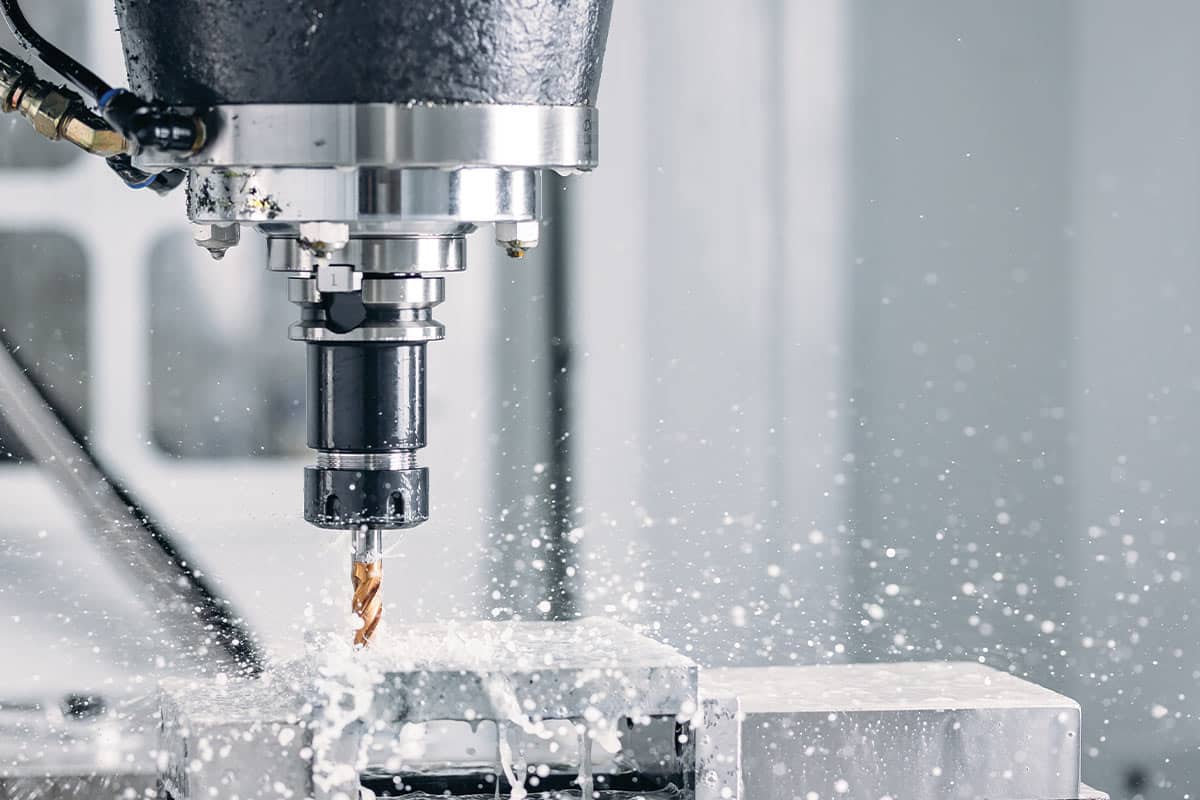
ACI Industries leverages rapid CNC prototyping to bridge this gap. By machining prototypes using production-intent methods, engineers can validate:
- Fit and assembly
- Surface finish requirements
- Functional performance under load
This approach reduces risk before committing to large material orders or production tooling, ensuring that the transition from prototype to production is seamless.
Transitioning the Setup: From Manual Flexibility to Automated Stability
Scaling production requires a fundamental shift in mindset—from manual flexibility to automated precision.
In the prototype phase, machinists may rely on hands-on adjustments to achieve optimal results. However, this approach is not sustainable in high-volume environments. Production demands deterministic, repeatable processes that deliver consistent outcomes without manual intervention.
At ACI, this transition is powered by rigid machine platforms and advanced workholding solutions, including Pierson Quick-Change Pallet Systems. These systems enable precise, repeatable setups that eliminate variability between runs.
This stability is the engine behind scaling high-spec components. It ensures that the same ±0.0005-inch precision achieved during prototyping is maintained across thousands of parts without compromise.
Scaling with Advanced Multi-Axis and “Done-in-One” Technology
As production volumes increase, complexity must be managed without sacrificing quality. This is where multi-axis machining scalability becomes essential.
ACI Industries utilizes advanced equipment such as:
- Brother Speedio M140X2 5-axis machining centers
- Tsugami M08SY automated turning centers
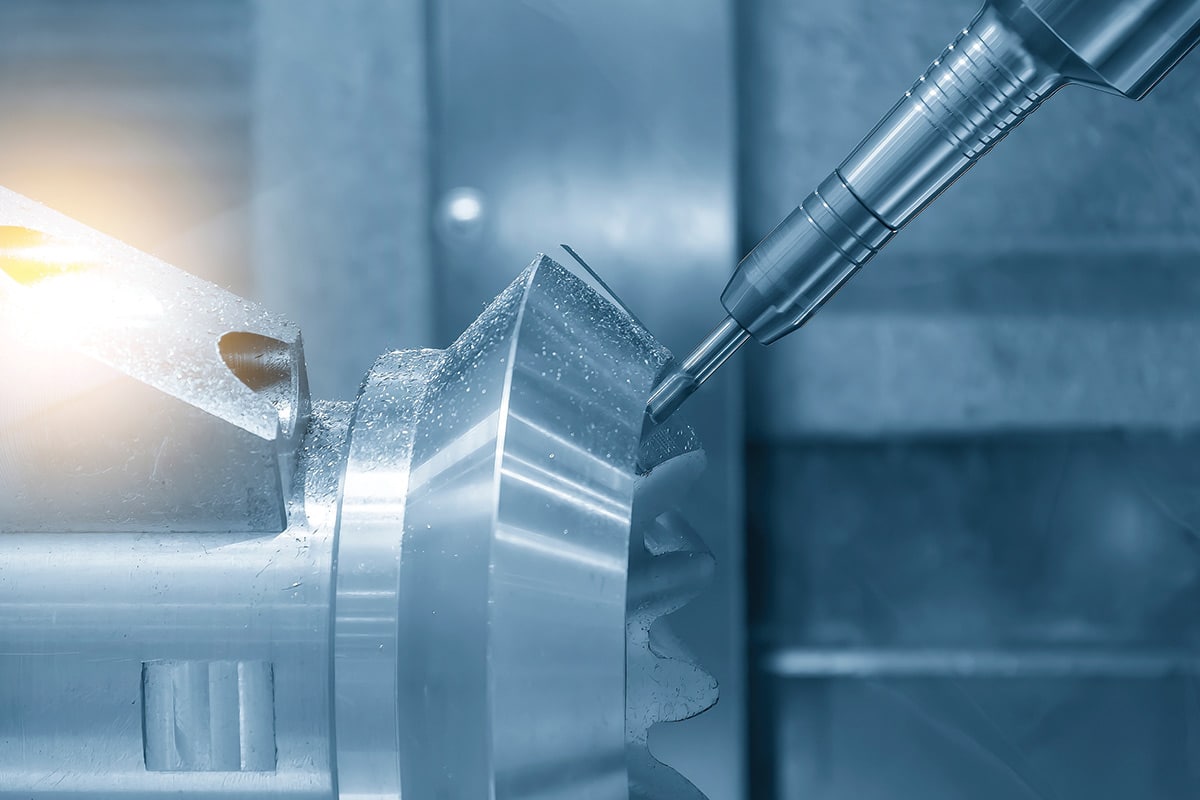
These platforms enable “done-in-one” machining, completing complex geometries in a single setup. By eliminating the need for multiple setups, manufacturers can reduce stack-up error, improve accuracy, and accelerate production timelines.
Additionally, ACI’s operations are designed for lights-out manufacturing. With bar feeders and robotic loading systems, production can run 24/7 without interruption. This not only increases throughput but also reduces lead times for high-volume orders.
The result is a scalable manufacturing process that maintains precision while meeting the demands of modern production.
Quality Without Compromise: Metrology and Traceability
Scaling production is meaningless if quality cannot be maintained.
ACI Industries implements robust quality control systems to ensure that every component meets specifications. These include:
- Hexagon Coordinate Measuring Machines (CMMs) for dimensional verification
- In-process probing to monitor part accuracy during machining
- Laser tool setting to maintain cutting precision
For industries such as aerospace and medical manufacturing, documentation is equally critical. ACI supports:
- First Article Inspection (FAI) reports per AS9102
- Full traceability to material heat lots
This level of quality assurance ensures that every part is not only within tolerance, but fully documented—meeting the stringent requirements of Tier 1 manufacturing environments.
Supply Chain Resilience: The Advantage of a Wisconsin Tier 1 Partner
In 2026, supply chain resilience is no longer optional—it is a competitive necessity.
The trend of reshoring manufacturing continues to accelerate as companies seek to reduce reliance on overseas production. By partnering with a U.S.-based manufacturer like ACI Industries, organizations gain greater control over quality, lead times, and logistics.
Located in Mequon, Wisconsin, ACI offers proximity to key Midwest manufacturing hubs, reducing transit delays and improving responsiveness.
Beyond machining, ACI provides Tier 1 services by managing critical secondary processes such as:
- Hard anodizing
- Black phosphate coating
- Additional finishing operations
This one-stop-shop approach simplifies procurement and ensures that every stage of production is aligned with quality standards.
Partnering for Future-Proof Manufacturing
A successful Prototype-to-Production roadmap is a continuous loop of refinement, optimization, and collaboration, not a linear process.
From initial design through full-scale production, every decision impacts cost, quality, and performance. By integrating DFM early, validating prototypes with production intent, and leveraging advanced CNC technologies, manufacturers can scale high-spec components without compromise.
ACI Industries brings together the expertise, technology, and process control required to make this transition seamless.
Raise your standard with American machining made smarter.
Contact our solutions engineering team to start your next high-spec project today.